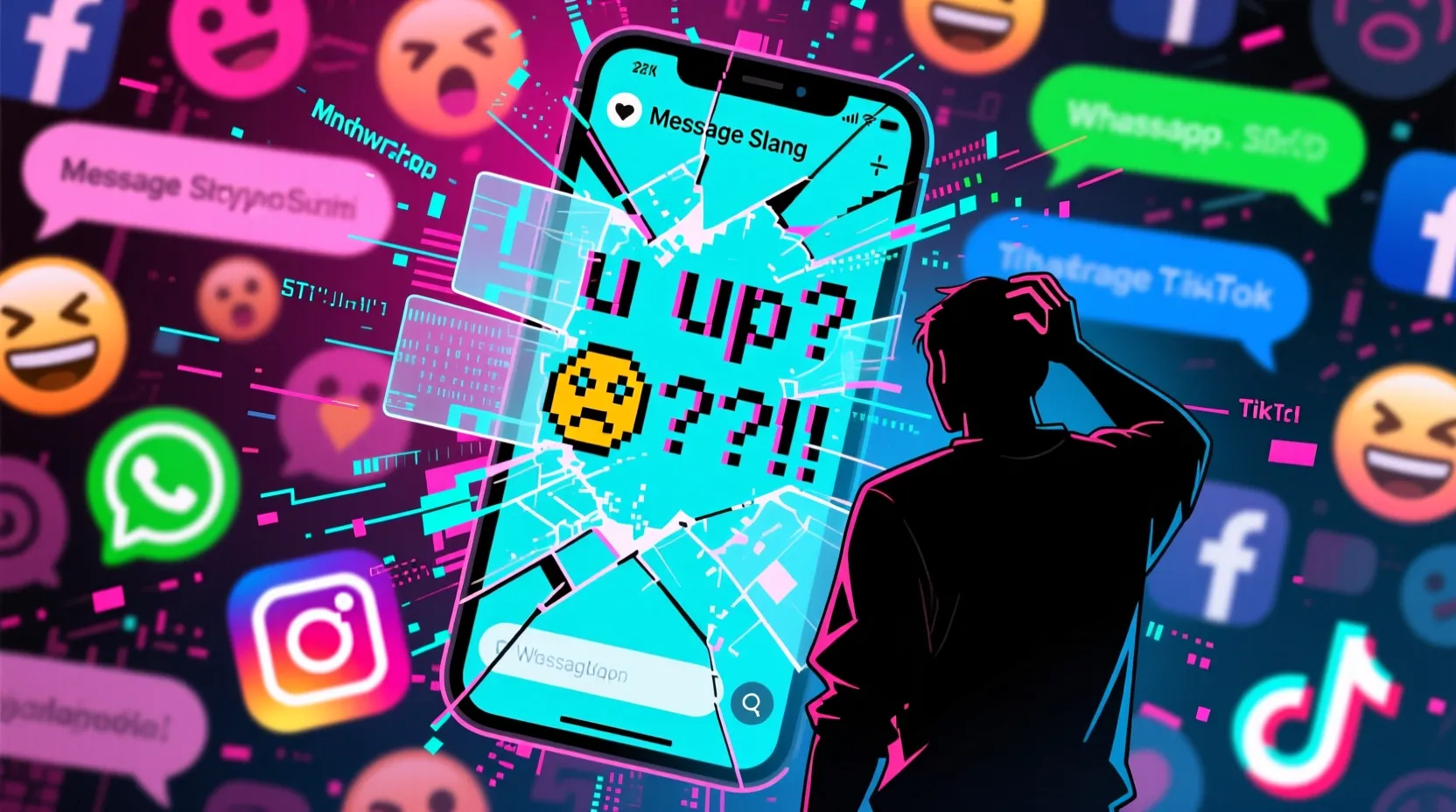
Have you ever been scrolling through your messages and suddenly saw someone reply with just a single word, an abbreviation, or an emoji that left you scratching your head? That moment of “Wait… what does that even mean?” is exactly why texting slang can be both fun and confusing. One common situation is seeing a message that makes you feel lost or puzzled — enter the world of Confused Message Slang.
Quick Answer: Confused Message Slang means expressions or abbreviations used to show that someone is puzzled, unsure, or doesn’t understand something. It’s a casual and friendly way to indicate confusion without needing to write a long explanation.
🧠 What Does Confused Message Slang Mean in Text?
Confused Message Slang refers to the shorthand, emojis, or phrases people use in chats to express they don’t get something. Instead of typing “I’m confused” or “I don’t understand,” users often rely on slang or symbols for quicker, relatable communication.
Example:
A: “Did you finish the homework?”
B: “idk 😕”
In short: Confused Message Slang = Short phrases/emojis indicating confusion = A quick, casual way to show you don’t understand something.
📱 Where Is Confused Message Slang Commonly Used?
This type of slang is mostly seen in informal conversations across social and messaging platforms:
- 📝 Texting (SMS or iMessage) – Quick replies to friends or family.
- 📱 Social Media DMs – Instagram, Snapchat, or TikTok comments.
- 🎮 Gaming Chats – Discord, in-game messaging, or multiplayer team chats.
- 🗨️ Group Chats – Especially among friends or classmates.
Tone: Casual, friendly, and social-media–friendly. Not suitable for formal work emails or professional communications.
💬 Examples of Confused Message Slang in Conversation
Here are some realistic examples of how people use confused message slang in texting:
Example 1:
A: “You’re meeting at 8 PM, right?”
B: “wait… 😕”
Example 2:
A: “I solved it in 2 steps.”
B: “uhh… how? 😵”
Example 3:
A: “The new update changed everything.”
B: “confused lol”
Example 4:
A: “Did you read the instructions?”
B: “idk what that means 🤷♂️”
Example 5:
A: “We need to redo the project.”
B: “wait, seriously? 😬”
Example 6:
A: “She said what?”
B: “I’m lost 😅”
🕓 When to Use and When Not to Use Confused Message Slang
✅ When to Use:
- Friendly conversations with friends or family
- Group chats where informal tone is fine
- Gaming or social media discussions
- Expressing mild confusion or surprise
❌ When Not to Use:
- Formal work emails or professional communication
- Serious or urgent messages
- Situations requiring clear instructions
- When tone could be misunderstood
| Context | Example Phrase | Why It Works |
| Friend Chat | “wait… 😕” | Casual & friendly |
| Work Chat | “Can you clarify this?” | Polite & professional |
| “Please provide more details.” | Formal & clear |
🔄 Similar Slang Words or Alternatives
| Slang | Meaning | When to Use |
| idk | I don’t know | Casual text chats with friends |
| wut | What? | Quick reaction in social media or gaming chats |
| 🤷♂️ | Shrug / I’m confused | Informal messaging, playful tone |
| huh? | What did you say? | Casual text or voice messaging |
| smh 😕 | Shaking my head confused | When puzzled or mildly frustrated |
❓ FAQs About Confused Message Slang
Q1: Is confused message slang only emojis?
No. It can include abbreviations, phrases, or combinations of text and emojis.
Q2: Can I use this slang in professional chats?
Not recommended. It’s informal and may seem unprofessional in work or academic contexts.
Q3: Is using confused slang considered rude?
Not usually. It’s a casual, friendly way to show you’re unsure or puzzled. Tone matters.
Q4: Are there regional differences?
Yes. Some abbreviations or emoji usage may vary between English-speaking countries or online communities.
Q5: Can confused slang be used in voice chats?
Yes, verbally you might say “idk” or “huh?” in casual conversations.
Conclusion
Confused Message Slang is a casual, friendly, and efficient way to show uncertainty or puzzlement in digital communication. Whether through abbreviations like idk or expressive emojis like 😕, it keeps chats light and relatable. Remember, while it’s perfect for texting friends, group chats, or social media, it’s best avoided in formal or professional situations. Using this slang correctly can help you communicate faster and sound more in tune with modern messaging culture.

Mark Twain was born in Florida, Missouri, and grew up in Hannibal, a town along the Mississippi River that later inspired many settings in his famous novels. After his father’s death, Twain left school early and worked as a printer, riverboat pilot, journalist, and lecturer experiences that deeply influenced his writing.