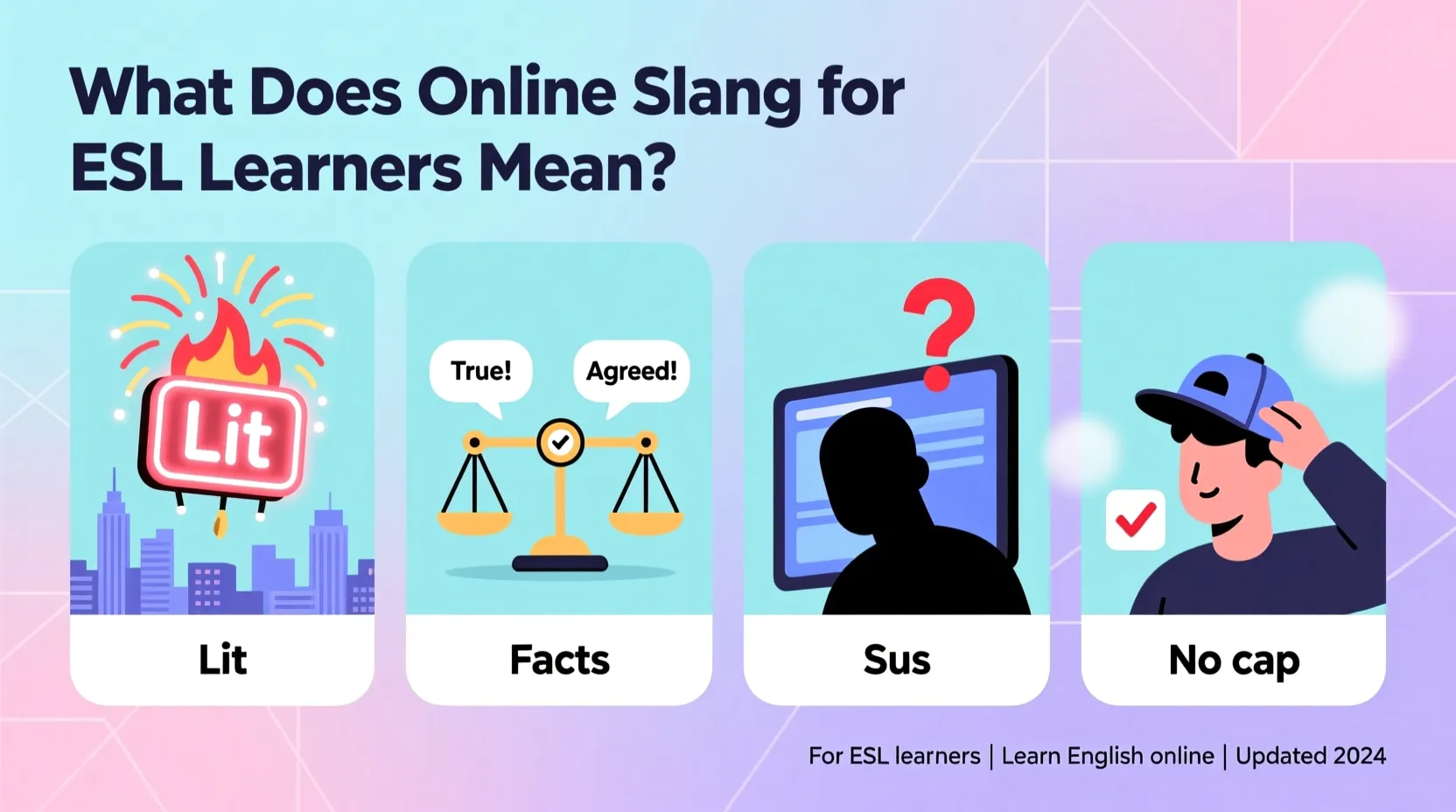
The first time you read a message like “brb lol idk tbh”, it can feel confusing—almost like English suddenly turned into a secret code.
Many ESL learners experience this moment while chatting with friends, scrolling social media, or playing online games.
You might know English grammar well, but online slang feels like a whole new language.
Quick Answer: Online slang means informal short words, abbreviations, or phrases used in digital communication. It’s a casual and friendly way of expressing ideas faster in texts, chats, and social media posts.
Online Slang for ESL Learners 🌍💬
Online slang refers to shortened forms of English words or phrases commonly used on the internet. These include abbreviations (LOL), acronyms (BRB), and casual expressions (OMG).
They help people:
- Type faster ⌨️
- Sound relaxed and friendly 😊
- Fit in with online conversations
Example sentence:
“idk what he meant lol 😅”
In short:
Online Slang for ESL Learners = Informal internet English = Faster, casual communication
📱 Where Is Online Slang Commonly Used?
Online slang is everywhere in digital spaces. Here’s where you’ll see it most often:
- 📲 Text messages & WhatsApp
- 📸 Instagram & Snapchat
- 🎵 TikTok comments
- 🎮 Gaming chats & Discord
- 🐦 Twitter/X replies
🔔 Tone note:
Online slang is casual and social-media–friendly, not formal or professional.
💬 Examples of Online Slang in Conversation
Here are real, easy chat-style examples ESL learners often see:
Example 1
A: u coming today?
B: idk yet 🤔
Example 2
A: that video was funny
B: lol fr 😂
Example 3
A: wait a sec
B: brb 🚶♂️
Example 4
A: thanks for helping
B: np! 😊
Example 5
A: are you serious??
B: omg yes 😱
Example 6
A: sorry i’m late
B: dw 👍
These short replies sound natural and friendly in online chats.
🕓 When to Use and When Not to Use Online Slang
✅ When to Use
- Chatting with friends or classmates
- Casual group chats
- Social media comments
- Gaming or livestream chats
❌ When Not to Use
- School assignments
- Job emails or interviews
- Professional work messages
- Serious or emergency situations
📊 Context Comparison Table
| Context | Example Phrase | Why It Works |
|---|---|---|
| Friend Chat | “np, idk yet 😄” | Relaxed & friendly |
| Group Chat | “brb guys” | Fast & informal |
| Work Chat | “I’ll check and update you.” | Polite & clear |
| “Thank you for your message.” | Professional tone |
🔄 Similar Slang Words or Alternatives
| Slang | Meaning | When to Use |
|---|---|---|
| LOL | Laughing out loud | Jokes, funny replies |
| BRB | Be right back | Short breaks |
| IDK | I don’t know | Casual uncertainty |
| TBH | To be honest | Sharing opinions |
| BTW | By the way | Adding info |
| NP | No problem | Friendly replies |
❓ FAQs About Online Slang for ESL Learners
Q1: Is online slang real English?
Yes! It’s informal English used mainly online, not in textbooks.
Q2: Should ESL learners use slang?
Yes, but only in casual situations. It helps you sound natural.
Q3: Is slang rude?
Not usually. It depends on context. With friends, it’s normal.
Q4: Can I use slang with teachers?
Better not. Use standard English in academic settings.
Q5: How can I learn slang faster?
Read chats, comments, and practice with friends online.
📝 Final Thoughts
Learning online slang for ESL learners is like unlocking a new level of English. You don’t need to use every slang word—just understanding them already makes online communication easier and less stressful. Start small, notice patterns, and soon those confusing messages will feel totally normal 😊
Discover More Post
🧠 What Does Secret Message Shortcuts Mean in Text?
Abbreviations That Sound Similar 🔤😵💫
Misunderstood Slang Words That Confuse Everyone
Hidden Code Words in Chat for 2026

Mark Twain was born in Florida, Missouri, and grew up in Hannibal, a town along the Mississippi River that later inspired many settings in his famous novels. After his father’s death, Twain left school early and worked as a printer, riverboat pilot, journalist, and lecturer experiences that deeply influenced his writing.