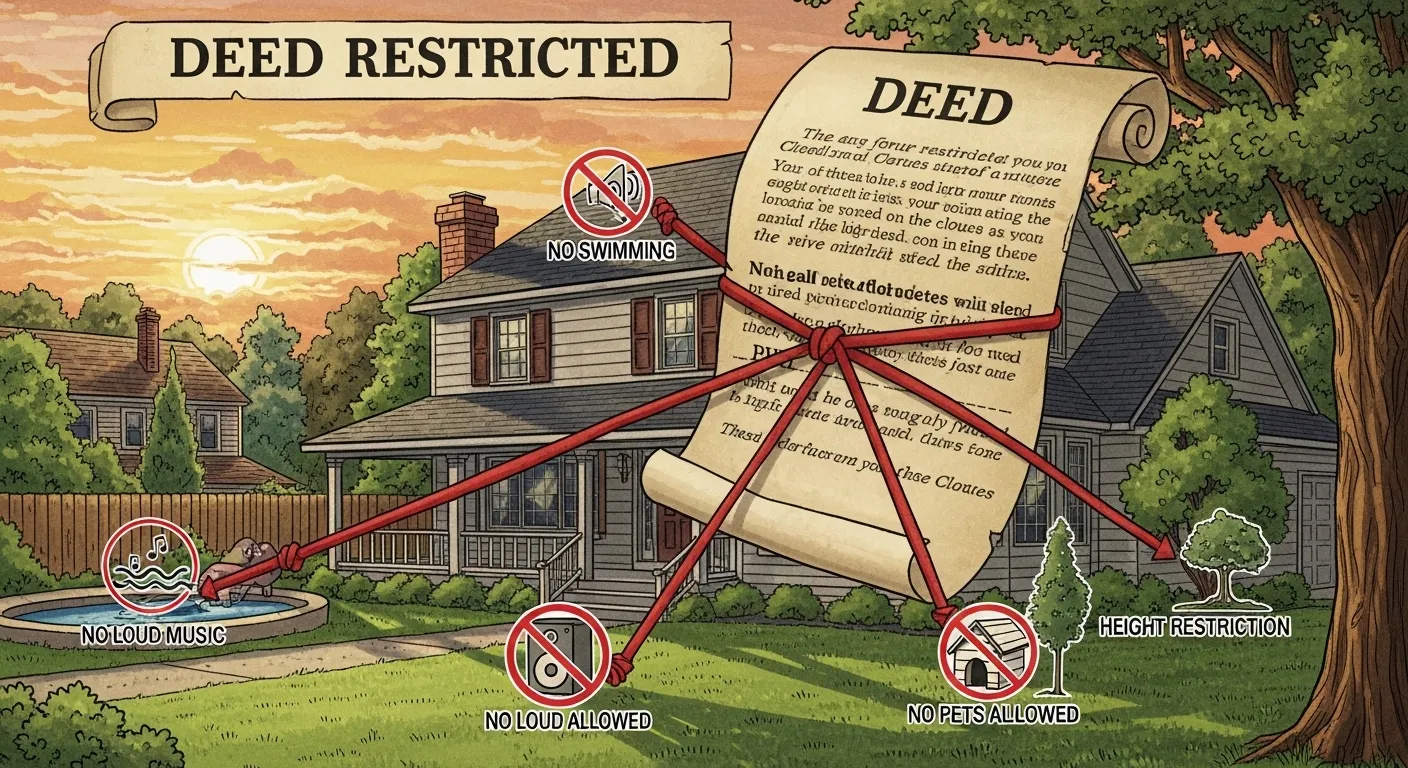
If you are researching property or planning to buy a home, you may come across the term deed restricted and wonder what it actually means.
In simple terms, a deed restriction is a rule written into a property’s legal documents that limits how the property can be used.
These restrictions are common in neighborhoods, communities, and certain housing programs, and they help maintain property values, community standards, or affordability requirements.
Understanding deed restrictions is important because they can affect what you can build, how you use your land, and even whether you can rent your home.
This guide explains what deed restrictions mean and how they impact property owners.
What Does Deed Restricted Mean
- 📜 Property has legal rules written into the deed that limit how it can be used
- 🏡 Restrictions often control building style, property use, or modifications
- 📏 Rules may regulate fence height, home size, or exterior colors
- 🧾 Restrictions remain attached to the property even when ownership changes
- 👥 They are usually created by developers or local governments
- 🛑 Owners must follow these rules to avoid legal issues
- 🧱 Some rules limit commercial activities in residential areas
- 🌳 Landscaping and yard maintenance may be regulated
- 🚗 Parking rules can be included in deed restrictions
- 🐕 Certain communities restrict number or type of pets
- 🏗️ Additions or renovations may require approval
- 💼 Businesses operating from home may be prohibited
- 📅 Restrictions can last for decades or permanently
- ⚖️ Violating them may lead to fines or legal action
- 🔍 Buyers should always review deed restrictions before purchasing property
What Does Deed Restricted Mean in Florida
- 🌴 Many Florida communities use deed restrictions to maintain neighborhood appearance
- 🏘️ Planned developments often include strict property rules
- 🏡 Restrictions may control architectural design and house colors
- 🌊 Coastal communities may regulate building height or structure type
- 🧾 Some homes have affordability deed restrictions for workforce housing
- 🚫 Short-term rentals may be limited in certain communities
- 🐾 Pet limits may apply in residential neighborhoods
- 🌴 Landscaping rules are common to maintain curb appeal
- 🚗 RV or boat parking may be restricted
- 🔧 Exterior modifications may require community approval
- 🏠 Restrictions often work alongside HOA rules
- 📑 Local county records keep copies of these restrictions
- 📅 Rules can remain in place for decades
- ⚖️ Violations can result in fines or legal enforcement
- 🔍 Buyers should review restrictions during the property closing process
What Does Deed Restricted Mean in Real Estate
- 🏡 A legal limitation attached to a property’s title
- 📜 Restrictions control how land or buildings are used
- 🧱 Developers often create them for planned communities
- 🏘️ They help preserve neighborhood standards
- 💰 They can protect long-term property values
- 🛑 They may prohibit certain businesses or activities
- 📏 They regulate construction, remodeling, and design
- 🐕 Pet ownership limits may apply
- 🚗 Parking restrictions may exist for vehicles or trailers
- 🧾 They are recorded in public property records
- 🔍 Buyers should check them before purchasing
- ⚖️ Violations can lead to legal enforcement
- 📅 Some restrictions expire while others remain permanent
- 🏠 They apply to current and future owners
- 🧩 They are an important part of real estate law
What Does Deed Restricted Mean in a Neighborhood
- 🏘️ Neighborhood appearance and standards are protected
- 🌳 Landscaping and lawn maintenance rules may apply
- 🏡 Homes may need to follow certain design styles
- 🚗 Parking restrictions help prevent street congestion
- 🐾 Limits may apply to pets or livestock
- 🧱 Rules may restrict fences or additions
- 🔊 Noise or business activity may be limited
- 🛠️ Exterior changes may require approval
- 📏 Property setbacks or building size rules may exist
- 🚫 Some activities may be prohibited to protect residents
- 🌸 Uniform design helps maintain community value
- 🧾 Rules are recorded with property deeds
- 👥 Community boards or HOAs often enforce them
- ⚖️ Violations can result in penalties
- 🔍 Buyers should review restrictions before moving in
What Does Deed Restricted Mean in Telluride
- 🏔️ Many homes are deed restricted to keep housing affordable
- 🏡 Restrictions often apply to workforce housing
- 👨💼 Owners or occupants may need to work locally
- 💰 Resale prices may be limited to maintain affordability
- 📜 Occupancy rules may apply to prevent investment use
- 🏘️ These homes help support the local workforce
- 🚫 Short-term rentals may be prohibited
- 🧾 Eligibility requirements may apply to buyers
- 📏 Property use may be limited to residential purposes
- 👥 Local government monitors compliance
- 📅 Restrictions often remain permanent
- ⚖️ Violating the rules can result in legal action
- 🔍 Buyers must review restrictions carefully
- 🏔️ Helps maintain a balanced housing market
- 🏠 Ensures locals can afford housing in the area
What Does Deed Restricted Mean in a Community
- 🏘️ Rules help maintain consistent community standards
- 🌳 Landscaping and property upkeep may be required
- 🏡 Home designs may follow community guidelines
- 🚗 Parking rules help reduce clutter or congestion
- 🐕 Pet ownership may have limits
- 🧱 Additions or structures may need approval
- 🔊 Noise or business activity may be restricted
- 🧾 Restrictions are written in legal property documents
- 👥 Community associations may enforce them
- 💰 Helps maintain property values
- 📅 Rules often last for decades
- ⚖️ Violations may lead to fines or disputes
- 🏠 Applies to all property owners in the community
- 🔍 Buyers should review documents before purchase
- 🧩 Creates organized and predictable neighborhoods
What Does Deed Restricted Mean in Colorado
- 🏔️ Commonly used to create affordable housing programs
- 👨💼 Residents may need to work locally to qualify
- 💰 Resale prices may be capped
- 🏡 Properties must usually be owner-occupied
- 🚫 Short-term rentals may be prohibited
- 🧾 Local housing authorities often manage restrictions
- 📏 Property use is typically residential only
- 👥 Buyers may need approval before purchasing
- 📅 Restrictions can last permanently
- 🏘️ Helps support local workforce housing
- 🔍 Buyers must meet eligibility rules
- ⚖️ Violations can lead to legal consequences
- 🧱 Structural changes may require approval
- 🏔️ Often found in resort towns
- 🏠 Helps maintain affordable living options
What Does Deed Restrictions Mean in Texas
- 🏡 Common in suburban housing developments
- 🌳 Landscaping and yard rules may apply
- 🚗 Restrictions may limit RV or boat parking
- 🧱 Building design or size rules may exist
- 🐕 Pet restrictions can apply in some neighborhoods
- 🏘️ Developers often create these rules
- 🧾 They are recorded in county property records
- 🛑 Commercial activities may be prohibited
- 🛠️ Home modifications may require approval
- 👥 Neighborhood associations may enforce them
- 📏 Fence height or placement rules may exist
- 📅 Restrictions may last for decades
- ⚖️ Violations can lead to legal disputes
- 🔍 Buyers should review deed documents carefully
- 💰 Helps maintain property value and neighborhood appearance
What Do Deed Restrictions Mean
- 📜 Legal rules tied to property ownership
- 🏡 Control how property is used or modified
- 🧱 May regulate construction or renovations
- 🚗 Parking restrictions may apply
- 🐾 Pet ownership may be limited
- 🌳 Landscaping requirements may exist
- 🏘️ Help maintain neighborhood appearance
- 🛑 Certain activities may be prohibited
- 🧾 Recorded with property deeds
- 👥 Often enforced by associations or local authorities
- 📅 May last many years or permanently
- ⚖️ Violations can lead to fines or legal action
- 🔍 Important to review before purchasing property
- 💰 Helps protect property value
- 🧩 Creates organized residential communities
What Does Title Restriction Mean
- 📜 A limitation recorded on a property title
- 🏡 Controls how the property may be used
- 🧾 Appears in official land records
- 🧱 May limit building size or structure type
- 🚫 Certain activities may be prohibited
- 🌳 Landscaping rules may apply
- 🐕 Pet limits may exist in some communities
- 🚗 Parking or vehicle restrictions may apply
- 👥 Often created by developers or municipalities
- ⚖️ Violating restrictions can lead to legal disputes
- 📅 Some restrictions expire over time
- 🏘️ Helps maintain neighborhood standards
- 🔍 Buyers should review title documents carefully
- 💰 Protects property value and community appearance
- 🧩 Part of real estate legal documentation
Deed Restrictions Examples
- 🏡 Minimum house size requirements
- 🎨 Approved exterior paint colors
- 🌳 Mandatory landscaping rules
- 🧱 Restrictions on fence height
- 🚗 Limits on street parking
- 🐕 Limits on number of pets
- 🏗️ Restrictions on building additions
- 🚫 No commercial business allowed
- 🏕️ No RV or trailer storage visible from street
- 🧾 Mandatory architectural approval for renovations
- 🌸 Yard maintenance requirements
- 🔊 Noise restrictions in residential areas
- 🏘️ Rules about rental properties
- 🏡 Setback rules for construction
- 🧩 Limitations on property subdivision
Deed Restrictions and Covenants
- 📜 Covenants are promises written into property documents
- 🏡 Deed restrictions are a type of covenant
- 🧾 Both control how property is used
- 🏘️ Common in planned communities
- 🧱 They may regulate construction and design
- 🌳 Landscaping and property maintenance may be required
- 🐕 Pet limits may be included
- 🚗 Parking or vehicle rules may apply
- 👥 Community associations often enforce them
- ⚖️ Violations can lead to legal action
- 📅 They can last for many years
- 🔍 Buyers should review covenant documents carefully
- 💰 Helps maintain neighborhood value
- 🏠 Applies to all future property owners
- 🧩 Important part of community planning
Deed Restricted vs HOA
- 🏡 Deed restrictions are legal property rules
- 👥 HOA is an organization managing the community
- 📜 Restrictions exist in property deeds
- 🧾 HOA enforces community guidelines
- 🏘️ Some communities have both systems
- 🚗 Parking and property appearance rules may overlap
- 🐕 Pet rules may be enforced by HOA
- 💰 HOA may charge monthly or yearly fees
- 🧱 Structural changes may require HOA approval
- ⚖️ Violations may result in HOA penalties
- 📅 Deed restrictions often last longer than HOA rules
- 🔍 Buyers should review both before purchasing
- 🏠 HOAs manage shared community spaces
- 🧩 Deed restrictions focus on property use
- 📑 Both help maintain neighborhood standards
Deed Restrictions vs Covenants
- 📜 Deed restrictions limit property use
- 🧾 Covenants are broader legal agreements
- 🏡 Both affect how property can be used
- 🧱 Restrictions often focus on building rules
- 🌳 Covenants may include maintenance requirements
- 🏘️ Both are common in planned communities
- 🐕 Pet policies may appear in either document
- 🚗 Parking rules may also be included
- 👥 Community associations often enforce them
- ⚖️ Violations can lead to legal consequences
- 📅 Some covenants expire over time
- 🔍 Buyers should review both documents
- 💰 They help protect property value
- 🏠 Apply to all property owners in the area
- 🧩 Important parts of property law
Where Can I Find Deed Restrictions
- 📑 Property deed documents
- 🏛️ County recorder or land registry office
- 🏘️ Homeowners association documents
- 🧾 Title company records
- 📜 Closing paperwork from property purchase
- 🏡 Real estate agent documentation
- 📂 Developer community documents
- 💻 Online county property record systems
- 📑 Property title reports
- 🧾 Legal disclosures during home purchase
- 🔍 Local government planning office records
- 📁 Property management companies
- 🏘️ Neighborhood association documents
- ⚖️ Real estate attorney records
- 📚 Historical land record archives
Do You Own the Land in a Deed Restricted Community
- 🏡 Yes, owners usually still own their property
- 📜 Restrictions only limit how the land is used
- 🧾 Ownership rights remain legally valid
- 🧱 Building changes may still require approval
- 🚗 Parking or storage rules may apply
- 🐕 Pet limits may exist
- 🌳 Landscaping standards may be required
- 🏘️ Community rules still apply to owners
- 💰 Property can usually still be sold
- 📅 Restrictions remain with the property after sale
- ⚖️ Violations may result in penalties
- 👥 Associations may enforce rules
- 🔍 Buyers must review restrictions before purchase
- 🧩 Ownership includes both rights and obligations
- 📑 Rules are recorded in the property deed
Deed Restrictions in Real Estate
- 📜 Legal limitations attached to property ownership
- 🏡 Used to control property development and use
- 🧱 May regulate building style or size
- 🚗 Parking restrictions may apply
- 🐕 Pet ownership limits may exist
- 🌳 Landscaping rules may be required
- 🏘️ Common in planned communities
- 🧾 Recorded in official property records
- 👥 Enforced by associations or governments
- ⚖️ Violations may lead to fines or lawsuits
- 📅 Some restrictions expire over time
- 🔍 Buyers should always review property documents
- 💰 Helps protect property value
- 🏠 Applies to current and future owners
- 🧩 Important concept in real estate law
Unenforceable Deed Restrictions
- ⚖️ Some restrictions become unenforceable over time
- 📅 Expired restrictions may no longer apply
- 🏛️ Laws may change and invalidate certain rules
- 🚫 Discriminatory restrictions are illegal
- 📜 Lack of enforcement for many years can weaken them
- 🧾 Improperly recorded restrictions may be invalid
- 🏘️ Changes in zoning laws may override them
- 👥 Courts may rule certain rules unreasonable
- 🔍 Legal review may be required to determine validity
- 🧑⚖️ Real estate attorneys can evaluate restrictions
- 📑 Property owners may challenge them in court
- 🧩 Some rules conflict with modern housing laws
- 🏡 Market changes may make them outdated
- ⚠️ Legal advice is important before ignoring restrictions
- 📚 Title searches help identify enforceability issues
Conclusion
Deed restrictions are an important part of property ownership and real estate transactions. They are legal rules attached to a property’s deed that control how the land or home can be used.
These restrictions help maintain neighborhood standards, protect property values, and sometimes ensure affordable housing for local residents. However, they can also limit what homeowners can do with their property.
Before buying any home or land, it is essential to review the deed restrictions carefully so you understand your rights and responsibilities as a property owner.

Olivia Parker has worked with startups, agencies, and established businesses across multiple industries, delivering high-quality, plagiarism-free, and conversion-optimized content. When she’s not writing, she stays updated on SEO trends, algorithm updates, and content marketing best practices to keep her clients ahead of the competition.